-
-
"I started thinking of a project that would be materialised within the garden. I started isolating and taking away rose petals. They expressed fragility, they expressed emotion and wholeness. At that time, I was feeling very fragile myself. So I explored this quality of the translucency and fragility of the petal."
– Kalliopi Lemos
-
Sculptures
-
After War and Peace
-
-
Diving Into Salt Water Series & Boats Carrying Hope Series
-
Sunset Glow Series & Sunset Hues Series
-
-
Immersed in Memories Series
-
New Insights Series (2025–26)
-
-
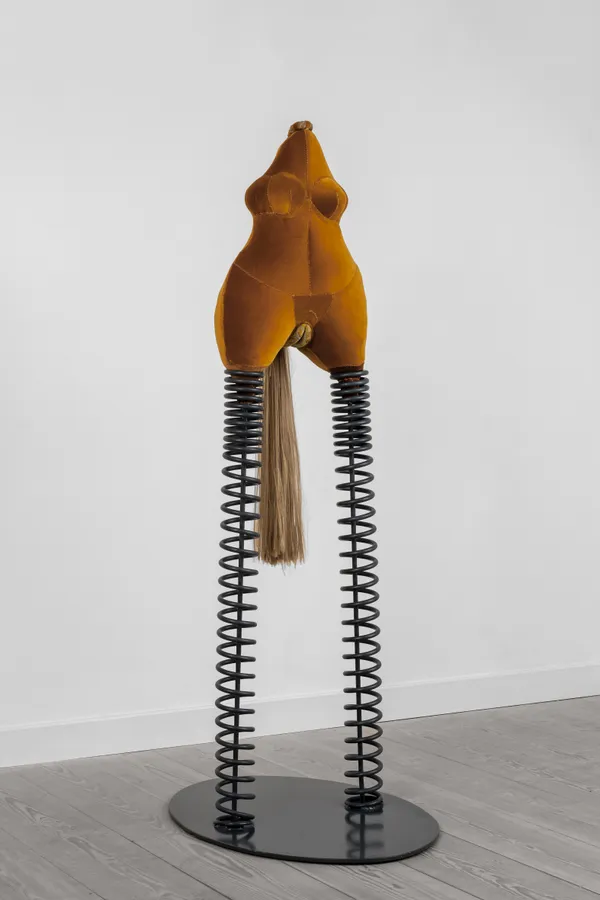
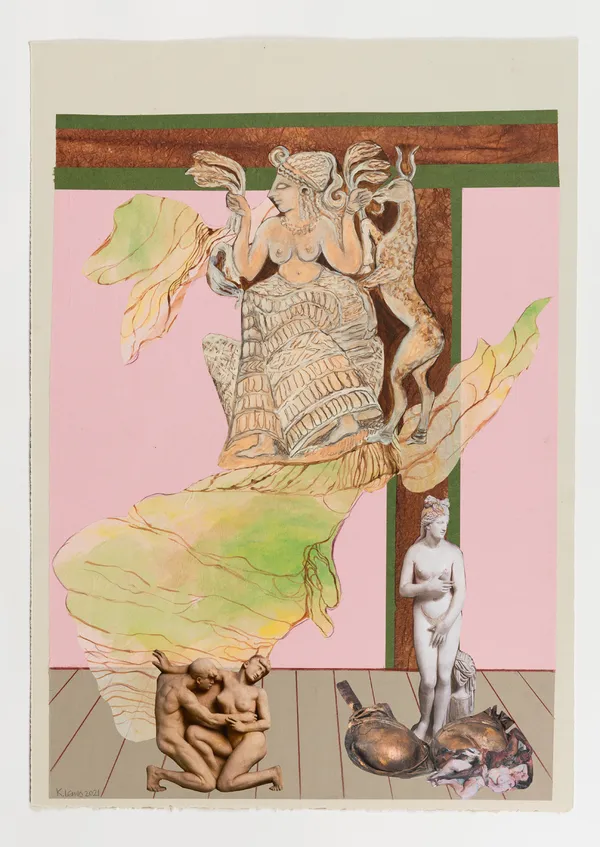
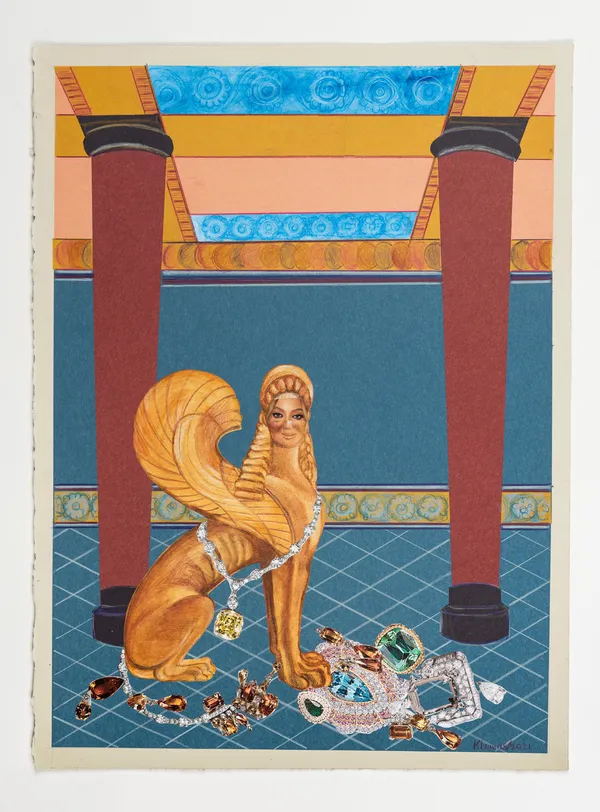
Exploration of the Feminine Series
-

-
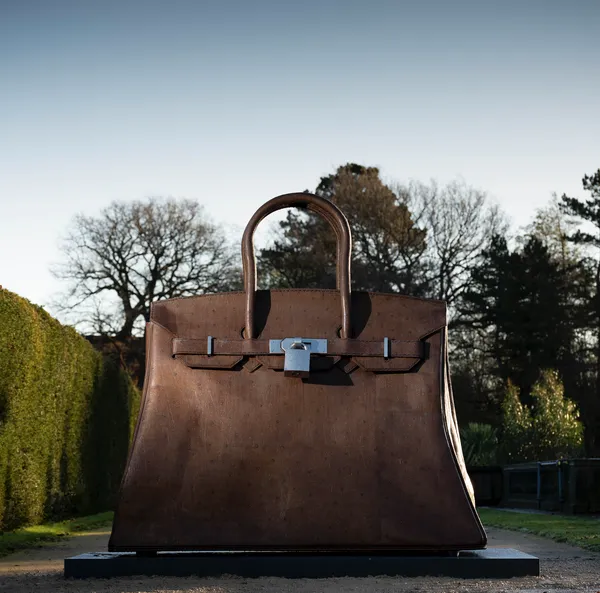
Bag of Aspirations, 2019
-
-
Kalliopi Lemos: Carrying Light Petal, Passage and the Work of Memory
By John Kenneth ParanadaRenowned curator of art and climate change at the Sainsbury Centre, Norwich, John Kenneth Paranada reflects on the works of Kalliopi Lemos.
In this new body of paintings, Kalliopi Lemos turns towards atmosphere and interior reflection without relinquishing the political and ethical concerns that have shaped her practice for decades. Known for sculptural boats that confront migration, human rights and the pressures of neo-capitalist power and patriarchy, Lemos now gathers those questions into colour, petal and horizon.
The works do not withdraw from urgency. Instead, they translate it into a more subtle yet no less potent language of light and form. As Plato suggests in the Symposium, love is the desire to possess the good perpetually. In Lemos’s terms, that desire becomes an act of carrying: a gesture of care through which something fragile may endure across uncertain passage.
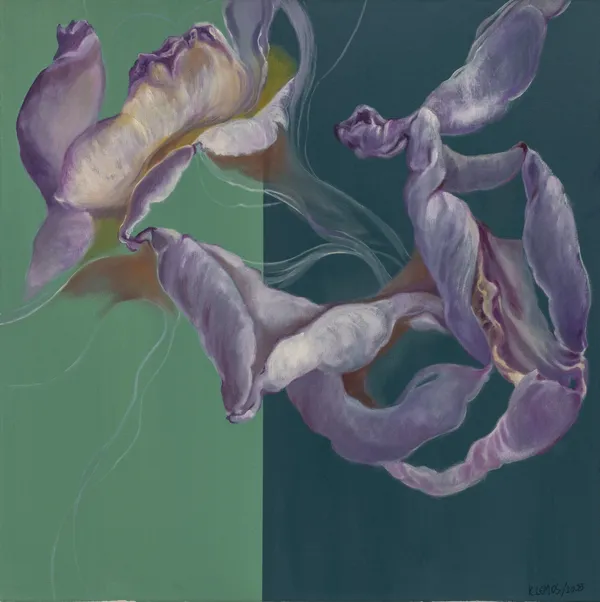
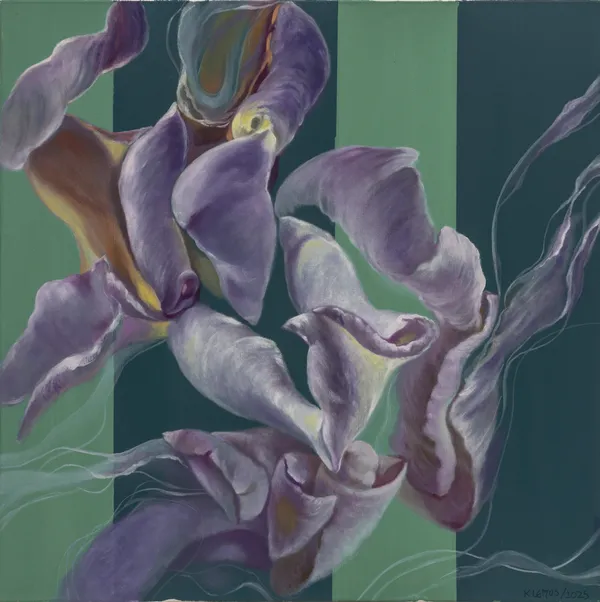
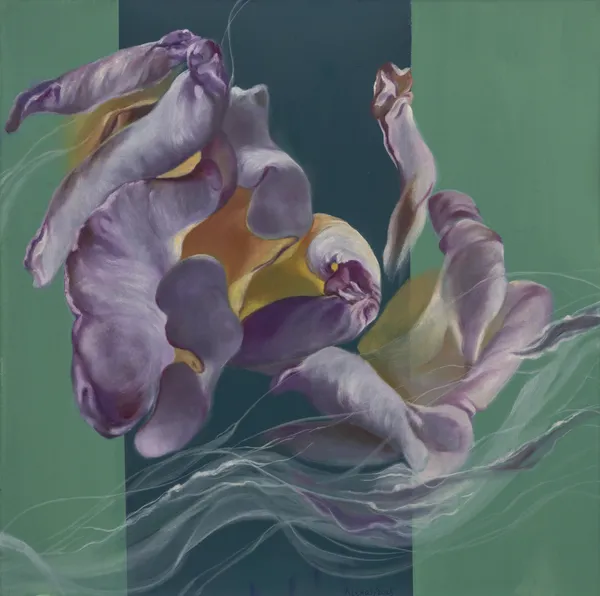
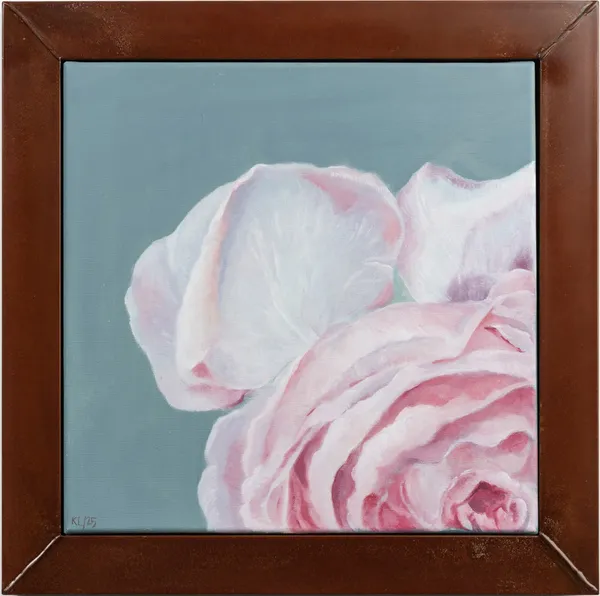
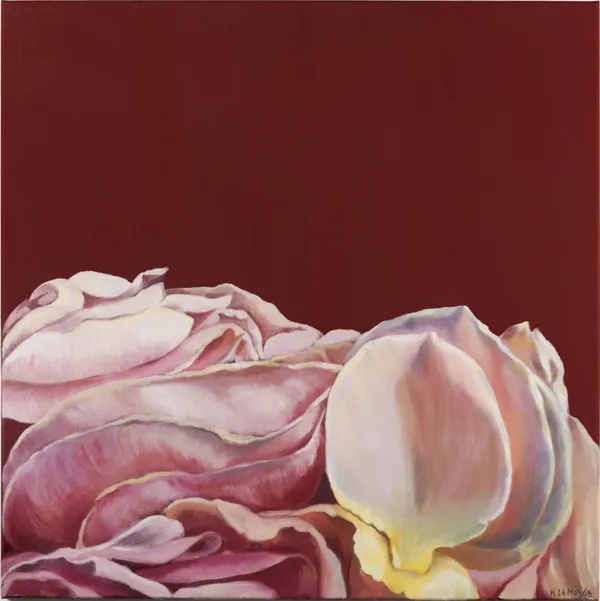
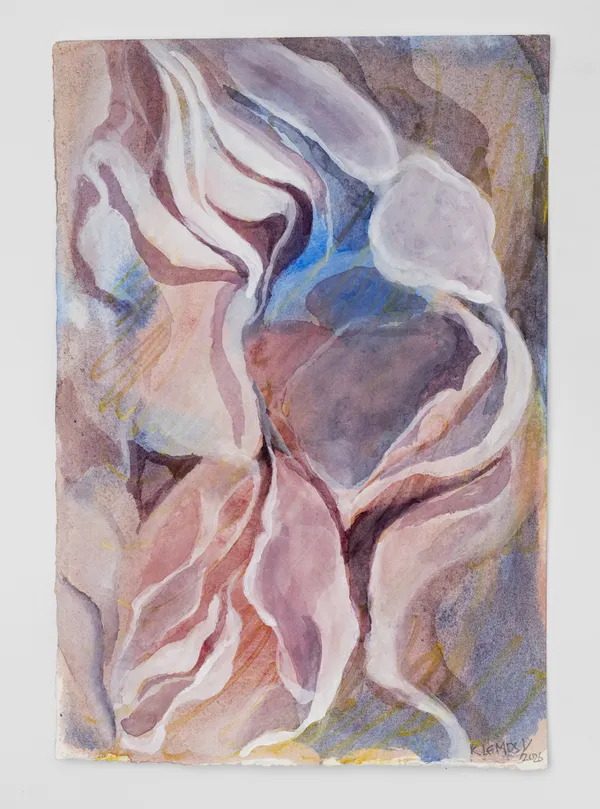
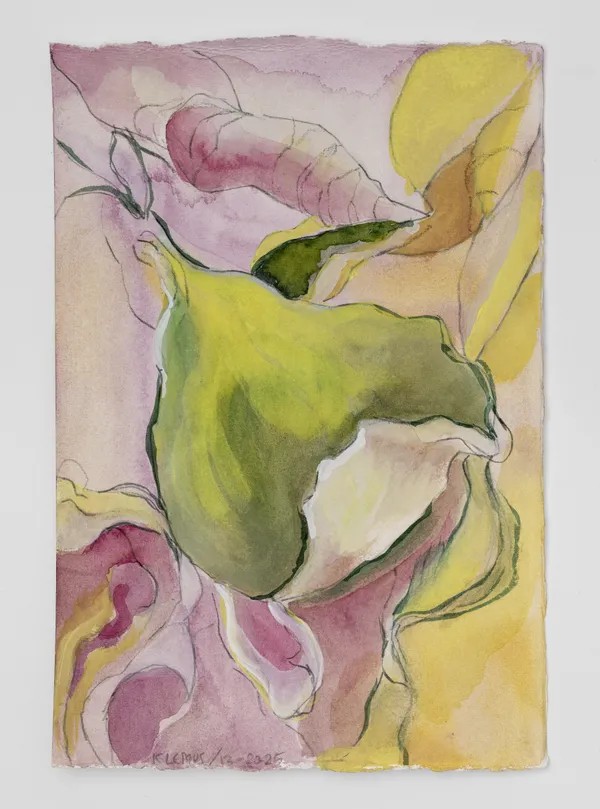
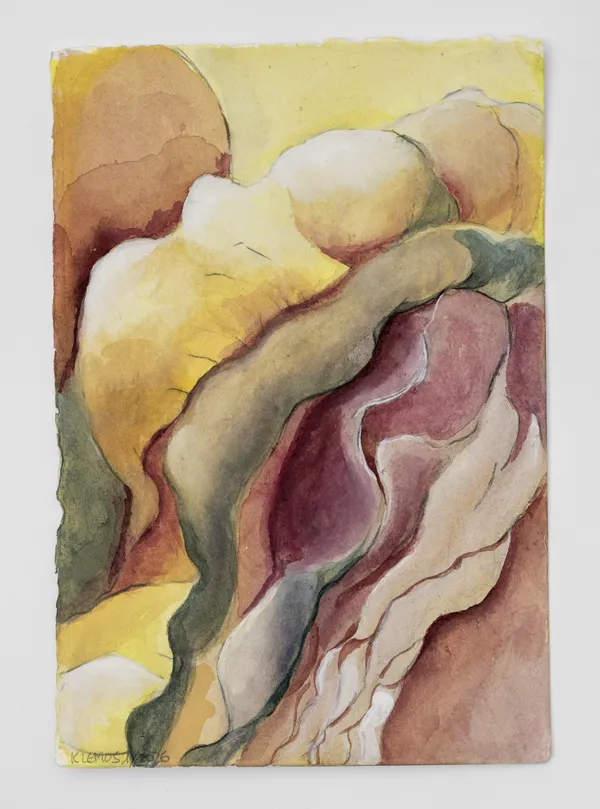
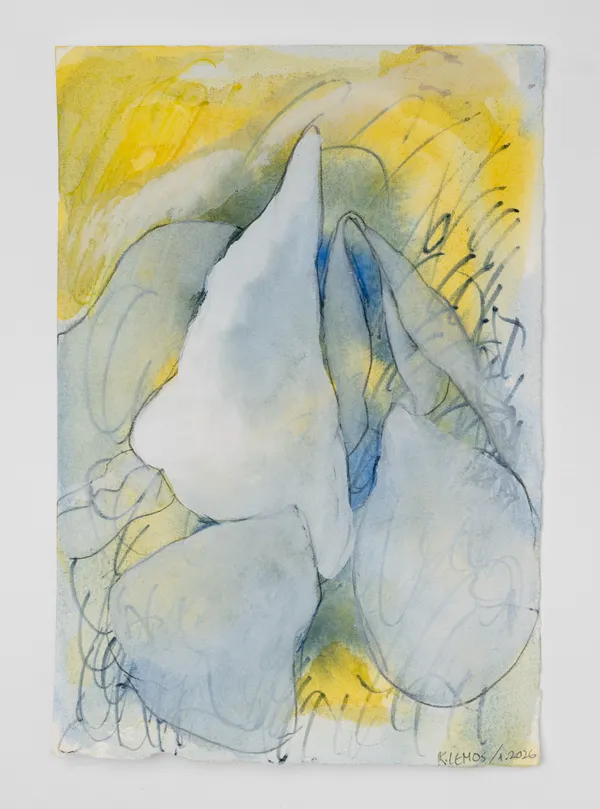
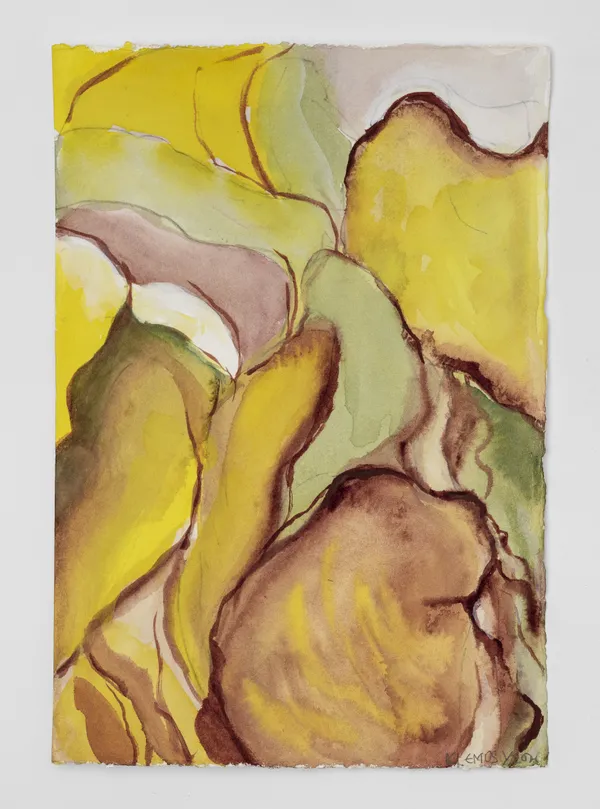
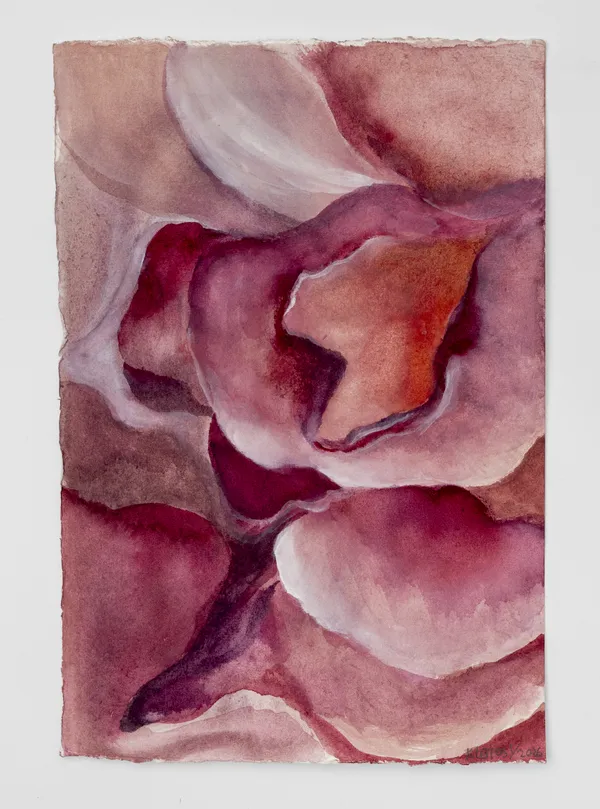
Floral forms shape the visual language of Lemos’s recent paintings. Working from photographic studies of rose petals taken across gardens in London and during her travels, the artist develops a fluid vocabulary of softness and movement. Petals unfurl and gather into gentle undulations, their contours drifting between abstraction and bodily suggestion. The rose is not presented as a botanical subject but as a pulse of colour and motion, a form that appears to breathe across the surface of the canvas.
In these works, the rose functions less as a still life than as a point of departure, allowing colour and movement to bloom through layered radiance of paint.
What commands attention in the paintings is the rose itself and the way it moves through different registers of meaning across history, its significance continually reshaped by colour. In antiquity the rose appears as a mythic and bodily form.
According to Greek mythology, the first red roses sprang from the death of Adonis, when Aphrodite’s grief mingled with his blood upon the earth. From that moment the flower became a symbol of love capable of confronting death, yet also of renewal. Laid upon graves, the rose signified remembrance and the persistence of life beyond loss.
By the eighteenth century the rose enters a different cultural register. Pink becomes associated with courtly beauty through Madame de Pompadour and the luminous blush of her cheeks, repeatedly staged by François Boucher in scenes of ornamental elegance.
In the nineteenth century the flower acquires devotional resonance through Thérèse of Lisieux, whose promise to “send down a shower of roses from heaven” transformed it into a symbol of spiritual grace.
These historical echoes reverberate through Lemos’s work, where the rose becomes a visual form capable of holding love, grief and memory simultaneously.
The chromatic progression across the series is especially striking. The early purple works hold a suspended dusk light: lilac coalescing into mint, lavender resting against soft ochre. Purple, long associated with dignity and mourning, becomes here a temporal colour field. In Purple in the Morning, Purple at Noon, and Purple in the Evening (2025), the same hue travels across different moments of the day. Time shifts, yet the emotional register remains suspended within the gradience of paint.
From this twilight palette the paintings gradually open towards the sea. In Diving into Salt Water (2025), turquoise and deep teal introduce a tidal rhythm to the composition. Petal forms drift through the field of colour as though carried by unseen currents. Migration, a long-standing concern in Lemos’s practice, surfaces here not as image but as structure: a sense of movement, gathering and dispersal within fluid space.
In Immersed in Memories (2025) the palette warms into coral, amber and blush. Memory glows rather than recedes. The petals soften at their edges, diffused by light, suggesting recollection as an emotional climate rather than a fixed archive.
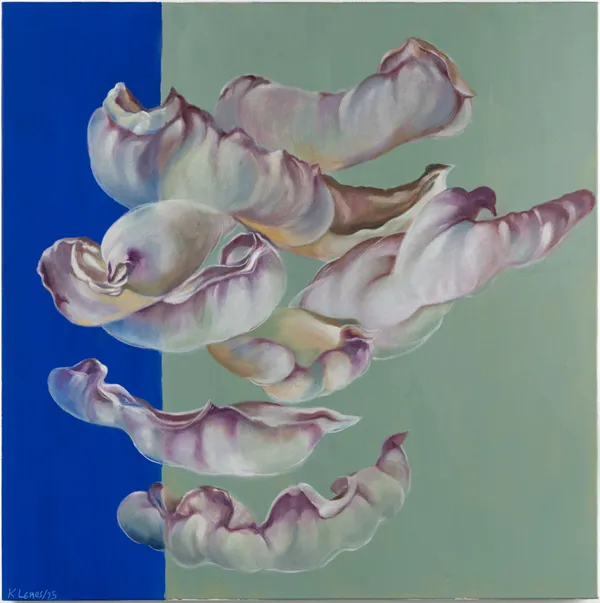
Formally these petals hover between flower, fabric and flesh. Some appear suspended, almost weightless; others turn inward as if sheltering themselves. Lemos avoids literal figuration, yet the folds of colour evoke bodily presence. The body emerges indirectly, sensed through gesture rather than depicted.
This sensitivity to form is informed by Lemos’s long engagement with Ikebana, the Japanese art of flower arrangement, which she studied for more than fifteen years. For the artist, Ikebana represents a philosophical discipline grounded in balance, asymmetry and the expressive power of emptiness. It cultivates attentiveness to the relationship between form, breath and space.
That sensibility is evident throughout the paintings. Each petal occupies the square format with deliberate restraint, breathing within fields of colour that function as emotional milieus. Negative space becomes active, creating pauses that allow the compositions to unravel slowly.
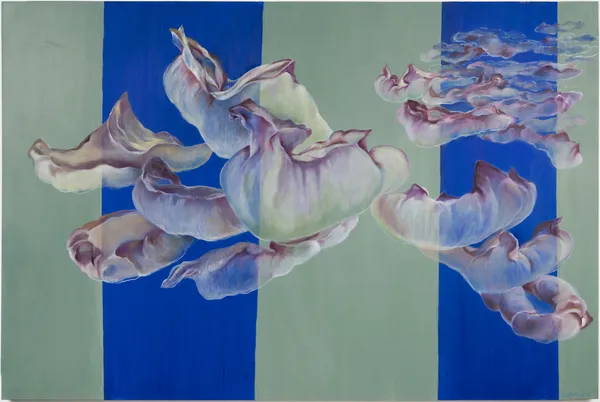
The boat, central to Lemos’s sculptural practice, reappears in Boats Carrying Hope (2025). Set within vertical bands of blue and green, the vessel floats in a field structured by rhythm rather than a vanishing line. What it carries remains unseen yet clearly named. Hope is fragile cargo, sustained only through movement across uncertain waters.
In the Sunset Hues and Sunset Glow series (2025), colour deepens into saturated reds and golds. Petals settle closer to the horizon as the temperature of light shifts. Sunset appears not as closure but as transformation, the moment when colour thickens and form dissolves into thin air.
Across this body of work Lemos subtly recalibrates the scale of her practice. Earlier sculptures confronted viewers in civic space with monumental forms of vulnerability. Here the gesture becomes more intimate, yet the ethical question persists: what does it mean to carry something fragile across a precarious world?
Greek myth returns us once more to the rose. In the ancient story of Adonis, the flower is born from the interlacing of love and loss, its red petals marking the moment when grief entered the natural world. From that myth onward, the rose has carried within it both beauty and sorrow, desire and mourning held within a single bloom.
In Lemos’s paintings the rose carries that inheritance forward. Petal turns to pigment; colour opens into a field of light. The flower appears again within another age, shaped by drifting seas, uncertain seasons and a changing climate. If myth once explained the birth of the red rose through love and grief, our own time may yet witness other transformations. For the artist, the rose emerges as an enduring living form, still taking shape within the shifting tides of the ever-changing present.
- Read the press release
-
Kalliopi Lemos: A Tide of Roses: Solo Show
Current viewing_room